Ted Sullivan has a disturbing, important post today at Ahead in the Count. He's writing about a youth baseball tryout in the New York area, attended by kids who probably haven't thrown a ball in months. There are lots of boys and girls, ages 8 to 12. And one radar gun.
This gives me a reason/an excuse to link to a post from last summer on youth baseball and curve balls. And to an article I wrote about the problem for the New York Times.
Friday, February 27, 2009


More on drug-testing in Texas
Returning to the subject of Monday's post, Texas governor Rick Perry appears to be laying the groundwork for scaled-back drug testing of high school athletes in the state. In this Houston Chronicle article, Perry's spokeswoman notes that the governor “would be open” to a less ambitious (and presumably, expensive) alternative. The state's lieutenant governor, an early and ardent advocate of the testing program, also says he's open to change.
To recap, 29,000 athletes - in the latest round, 12,159 boys representing 10 sports and 6,658 girls representing 12 sports -have been screened for performance-enhancing drugs in Texas. Eleven have tested positive. Here are the positive results, by sport. (In several cases, the athletes testing positive participated in more than one sport.)
Football: 5
Wrestling: 1
Football/ track/soccer: 1
Football/wrestling: 1
Track/soccer: 1
Baseball/soccer: 1
Football/track: 1
To recap, 29,000 athletes - in the latest round, 12,159 boys representing 10 sports and 6,658 girls representing 12 sports -have been screened for performance-enhancing drugs in Texas. Eleven have tested positive. Here are the positive results, by sport. (In several cases, the athletes testing positive participated in more than one sport.)
Football: 5
Wrestling: 1
Football/ track/soccer: 1
Football/wrestling: 1
Track/soccer: 1
Baseball/soccer: 1
Football/track: 1
Wednesday, February 25, 2009
Shout at your youth soccer player - it'll cost you $45
I'm collecting examples of rules that adults make to shield kids in organized sports from....adults. I am not disparaging these policies. For the most part, they're wise and needed. But there is something unsettling about having to protect them (children) from us.
In a soccer league in Duval County, Florida, parents, players and coaches are required to sign a "sportsmanship contract” before the season begins.
In youth soccer leagues in Naples, Florida, calling out to a player during a game can cost a parent $45.
In Louisiana, the Baton Rouge Soccer Association instituted “Silent Weekends.” Parents and coaches are barred from speaking during games.
The Central Pennsylvania Youth Soccer League has a "Silent Soccer" weekend each year. To keep parents quiet - and their mouths occupied - the Pennsylvania league hands out lollipops.
Of course, Little League Baseball has an elaborate system for limiting pitches. An 11- and 12-year-old pitcher is limited to 85 pitches a day. The amount of rest between pitching assignment varies depending on the number of pitches thrown, i.e., pitcher throwing more than 61 in a game must rest for three days of rest and a pitcher throwing 41 to 60 pitches has to stay off the pitching mound for two.
Please send additions from your local league, rec council, etc. I'll post, give credit and, if you'd like, will record the message on your home answering machine.
In a soccer league in Duval County, Florida, parents, players and coaches are required to sign a "sportsmanship contract” before the season begins.
In youth soccer leagues in Naples, Florida, calling out to a player during a game can cost a parent $45.
In Louisiana, the Baton Rouge Soccer Association instituted “Silent Weekends.” Parents and coaches are barred from speaking during games.
The Central Pennsylvania Youth Soccer League has a "Silent Soccer" weekend each year. To keep parents quiet - and their mouths occupied - the Pennsylvania league hands out lollipops.
Of course, Little League Baseball has an elaborate system for limiting pitches. An 11- and 12-year-old pitcher is limited to 85 pitches a day. The amount of rest between pitching assignment varies depending on the number of pitches thrown, i.e., pitcher throwing more than 61 in a game must rest for three days of rest and a pitcher throwing 41 to 60 pitches has to stay off the pitching mound for two.
Please send additions from your local league, rec council, etc. I'll post, give credit and, if you'd like, will record the message on your home answering machine.
Monday, February 23, 2009
Drug testing and the lesson of Taylor Hooton
Texas just released results from the second year of its drug testing program for high school athletes. Of 19,000 tests administered, the number of positive results was just seven.
This just fuels the debate about such tests. Advocates say they're an effective deterrent - kids don't do performance-enhancing drugs when they fear being caught. Skeptics question how a program that catches seven kids a year could be worth the cost - $6 million.
Texas, New Jersey and Illinois are the only states that test high school athletes for steroids. Florida dropped its program recently, after testing 600 kids and turning up one steroid user.
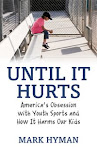
I get into this subject in depth in Until It Hurts, my book about the troubled state of youth sports (Publication date: April 1). I write at length about Taylor Hooton, the Texas teenager and baseball pitcher who committed suicide. His dad believes Taylor took his life because of earlier steroid abuse.
In the book, Don Hooton tells me that his son got instructions from a coach to "get bigger" if he hoped to make the varsity the following season. Taylor opted to get bigger using steroids, tragically.
I like what Don Hooton has to say to the Associated Press about the value of mandatory steroid testing, even when the program turns up just a few positives: "They don't stop testing Olympic athletes just because most of them don't test positive."
My view is this: the alternatives to testing programs that cost too much and catch few drug abusers are even less acceptable.
This just fuels the debate about such tests. Advocates say they're an effective deterrent - kids don't do performance-enhancing drugs when they fear being caught. Skeptics question how a program that catches seven kids a year could be worth the cost - $6 million.
Texas, New Jersey and Illinois are the only states that test high school athletes for steroids. Florida dropped its program recently, after testing 600 kids and turning up one steroid user.
I get into this subject in depth in Until It Hurts, my book about the troubled state of youth sports (Publication date: April 1). I write at length about Taylor Hooton, the Texas teenager and baseball pitcher who committed suicide. His dad believes Taylor took his life because of earlier steroid abuse.
In the book, Don Hooton tells me that his son got instructions from a coach to "get bigger" if he hoped to make the varsity the following season. Taylor opted to get bigger using steroids, tragically.
I like what Don Hooton has to say to the Associated Press about the value of mandatory steroid testing, even when the program turns up just a few positives: "They don't stop testing Olympic athletes just because most of them don't test positive."
My view is this: the alternatives to testing programs that cost too much and catch few drug abusers are even less acceptable.
Friday, February 20, 2009
"You can't arrest me, you're a referee"
Among the many reasons not to attack a high school referee: He may be an off-duty state trooper. The Munster (Ind.) Times reports on a fan who picked a fight with the wrong guy.
From the article:
"The referee who was attacked -- Indiana State Police Trooper Glen Fifield -- said Rempala rushed out of the stands after the game and confronted the referees, screaming "you suck."
"Fifield said Rempala pointed at his chest and bumped him, but Fifield tried to walk away. A school official stepped in between the two, but he said Rempala went around the official and came after him again. Fifield said Rempala pushed him, at which time he identified himself as a police officer and told him he was under arrest.
"Rempala said, "You can't arrest me, you're a referee," and he pushed the trooper again, Fifield said. After a struggle and with assistance from spectators, Fifield gained control of Rempala and arrested him. Fifield said during the struggle, Rempala tried to choke him with his referee's whistle lanyard. Fifield said he suffered knee and shoulder pain after the struggle.
"Rempala, once he realized the referee he attacked really was a trooper, reportedly said, "That's not fair."
Thanks to Stephanie Compton for the tip.
From the article:
"The referee who was attacked -- Indiana State Police Trooper Glen Fifield -- said Rempala rushed out of the stands after the game and confronted the referees, screaming "you suck."
"Fifield said Rempala pointed at his chest and bumped him, but Fifield tried to walk away. A school official stepped in between the two, but he said Rempala went around the official and came after him again. Fifield said Rempala pushed him, at which time he identified himself as a police officer and told him he was under arrest.
"Rempala said, "You can't arrest me, you're a referee," and he pushed the trooper again, Fifield said. After a struggle and with assistance from spectators, Fifield gained control of Rempala and arrested him. Fifield said during the struggle, Rempala tried to choke him with his referee's whistle lanyard. Fifield said he suffered knee and shoulder pain after the struggle.
"Rempala, once he realized the referee he attacked really was a trooper, reportedly said, "That's not fair."
Thanks to Stephanie Compton for the tip.
Thursday, February 19, 2009
Sportsmanship alive in Wisconsin (and Illinois)
Too often in this space we're writing about the decline of sportsmanship. This story from the Milwaukee Journal Sentinel and, later, USA Today's Prep Rally balances the scales. A remarkable story that occurred during a high school basketball game in Wisconsin.
An iPhone app for Little League parents
Forbes.com reports on an idea whose time has come: A new iPhone app for parents who can't make it to the game - GameChanger. The inventor is Ted Sullivan, 32, a former minor league pitcher.
Notes Forbes: "Here's Sullivan's pitch. Each baseball squad has a scorekeeper who logs every at-bat, mainly on pen and paper. GameChanger's friendly interface uses straightforward language instead of baseball lingo. Example: Rather than describe a shortstop-to-second-baseman-to-first-baseman double play as a "6-4-3 DP," GameChanger lets users click on parts of the field where the ball traveled. It can also track customized statistics like "hustle points" or strong defensive plays.
"Once logged in, the scoring data flows to [Fungo Media, Sullivan's company] servers, which can beam it, in the form of text messages, to the phones of all those busy parents and relatives--as well as to the hundreds of Web sites, newspapers and TV affiliates looking to beef up their news coverage on the cheap."
GameChanger is set to roll out March 1 in New York, Washington, D.C., St. Louis and Orange County, Calif. More info coming at Apple's "apps store."
Tuesday, February 17, 2009
More on youth football and heat stroke
Rhonda Fincher of Rogers, Arkansas saw last week's post on Max Gilpin's death and contacted me about a loss in her family. In 1995, her son Kendrick went off to the first day of football practice. He got overheated during the workout and collapsed. Max Gilpin was 15 when he died from heatstroke last August. Kendrick Fincher was 13.
Rhonda is executive director of the Kendrick Fincher Memorial Foundation, which raises awareness about the issue.
She wrote: "I don't believe coaches go into coaching to hurt anyone. They want to help children become the best athlete they can and many of them are interested in helping that child become the best adult they can. Sadly, many of these coaches were raised in an era without air conditioning, video games, energy drinks and soda--all things, I believe, that contribute to the increase in heat related incidences of children in sports. Coaching has to be different today and parents and the athletes also need to share a role in the responsibility."
Rhonda is executive director of the Kendrick Fincher Memorial Foundation, which raises awareness about the issue.
She wrote: "I don't believe coaches go into coaching to hurt anyone. They want to help children become the best athlete they can and many of them are interested in helping that child become the best adult they can. Sadly, many of these coaches were raised in an era without air conditioning, video games, energy drinks and soda--all things, I believe, that contribute to the increase in heat related incidences of children in sports. Coaching has to be different today and parents and the athletes also need to share a role in the responsibility."
Monday, February 16, 2009
Watching a child play sports, in eight words
What do you feel when you're watching your child play organized sports? Defending goal in a tight game? Digging in at home plate with the league's best pitcher on the mound?
What are you thinking?
Tell me in eight words or fewer.
My turn?
Racing heart. Sweaty palms. You can do it.
What are you thinking?
Tell me in eight words or fewer.
My turn?
Racing heart. Sweaty palms. You can do it.
Youth sports dysfunction, European-style
Once again, the subject is the global reach of youth sports dysfunction. Last week's bad example, Canada. This week's, Great Britain where "touchline dads" are a major headache.
This comes from the London Daily Telegraph.
"Right now, however, in the midst of the inquiry into England's inability to qualify for Euro 2008, the touchline dad has become more than a joke. He is being cited as one of the reasons for our failure to develop good young players. His overbearing presence, it is claimed, is sucking the joy out of the game, producing a generation of leather-lunged hackers, unable to express themselves through skill, brought up to believe the most important thing in football is to "get stuck in". And, indeed, in eight years managing my son's team I have witnessed some terrible things. The father who stepped on to the pitch, grabbed his under-performing son by the shirt front, lifted him off his feet and, spitting with rage, told him, nose-to-nose, that he would be getting it when he got home, was but one."
There is a strong back-to-sportsmanship movement in the UK, led by groups like Positive Coaching Scotland. There's much work to do, apparently.
Thank you, Doug Abrams.
This comes from the London Daily Telegraph.
"Right now, however, in the midst of the inquiry into England's inability to qualify for Euro 2008, the touchline dad has become more than a joke. He is being cited as one of the reasons for our failure to develop good young players. His overbearing presence, it is claimed, is sucking the joy out of the game, producing a generation of leather-lunged hackers, unable to express themselves through skill, brought up to believe the most important thing in football is to "get stuck in". And, indeed, in eight years managing my son's team I have witnessed some terrible things. The father who stepped on to the pitch, grabbed his under-performing son by the shirt front, lifted him off his feet and, spitting with rage, told him, nose-to-nose, that he would be getting it when he got home, was but one."
There is a strong back-to-sportsmanship movement in the UK, led by groups like Positive Coaching Scotland. There's much work to do, apparently.
Thank you, Doug Abrams.
Friday, February 13, 2009
Learning from the tragedy of Max Gilpin
Perhaps something positive will come from the tragic story of Max Gilpin, the 15-year-old from Louisville who died after suffering heat stroke last summer during a high school football practice. Max's coach has been charged with reckless homicide.
The Louisville Courier-Journal reports on a bill introduced in the Kentucky state legislature that would mandate ice pools be available during practices and games when the heat index is above 94 degrees. The bill, introduced by Rep. Joni Jenkins, also calls for coaches to be certified in CPR and to be trained to use a portable device for treating people in cardiac arrest, according to the newspaper.
Max's mother, Michele Crockett,told the C-J: "After Max died, I said his death is not going to be in vain, and I am so excited to see somebody feels this is as important as we do."
The Louisville Courier-Journal reports on a bill introduced in the Kentucky state legislature that would mandate ice pools be available during practices and games when the heat index is above 94 degrees. The bill, introduced by Rep. Joni Jenkins, also calls for coaches to be certified in CPR and to be trained to use a portable device for treating people in cardiac arrest, according to the newspaper.
Max's mother, Michele Crockett,told the C-J: "After Max died, I said his death is not going to be in vain, and I am so excited to see somebody feels this is as important as we do."
New research on injuries to disabled players
Interesting new research on a seldom-discussed topic: sports injuries among high school kids with disabilities. Among the findings: players at greatest risk for injury were athletes with autism and athletes with histories of seizures. "Athletes with autism had about five times the injury rate of athletes with mental disabilities. Athletes with seizures had more than 2.5 times the rate of injury reported among those with no seizure history," according to the study published this month in the journal Pediatrics.
Wednesday, February 11, 2009
Youth hockey, obscene gestures in Canada
Youth sports dysfunction may seem uniquely American. It isn't. This occurred recently in Ontario.
"A Chatham man received a warning, but no charges, from St. Thomas police after an obscene gesture resulted in a pushing match at a girls minor hockey game on Saturday.
St. Thomas police were called to St. Thomas-Elgin Memorial Arena around 2:30 p.m. Saturday to reports of an altercation during a St. Thomas Panthers minor girls hockey game.
Staff Sgt. Randy Mundt of St. Thomas police explained a man made an inappropriate gesture at one of the players on the ice. The teams involved were eight- and nine-year-old girls, he said."
That last sentence stopped me: "The teams involved were eight- and nine-year-old girls."
Go here for a few more details.
Thanks to Doug Abrams for the tip.
"A Chatham man received a warning, but no charges, from St. Thomas police after an obscene gesture resulted in a pushing match at a girls minor hockey game on Saturday.
St. Thomas police were called to St. Thomas-Elgin Memorial Arena around 2:30 p.m. Saturday to reports of an altercation during a St. Thomas Panthers minor girls hockey game.
Staff Sgt. Randy Mundt of St. Thomas police explained a man made an inappropriate gesture at one of the players on the ice. The teams involved were eight- and nine-year-old girls, he said."
That last sentence stopped me: "The teams involved were eight- and nine-year-old girls."
Go here for a few more details.
Thanks to Doug Abrams for the tip.
What kids think about A-Rod, steroids
It's interesting looking back on the good deeds Alex Rodriguez was doing while he was also doing steroids. In 2003, A-Rod presided over a ground-breaking ceremony for "The Alex Rodriguez Education Center" at the Boys & Girls Clubs of Miami, an event trumpeted by Major League Baseball.
A-Rod made a major gift to the center and explained the gesture this way: "I'm all about giving kids different avenues and good avenues. In life, there are bad ways you can go. I want to give kids good avenues."
Linda Robertson of the Miami Herald stopped in at the A-Rod Center this week to chat with kids playing ball. From the Herald article:
"He [Rodriguez] is like a living patron saint to this place. He always comes around in the off-season, to work out, to hang out. He gives away Christmas gifts, holds baseball clinics, tutors students. To the kids, he was the ultimate role model, because he was one of them, made it big and never forgot his roots.
"Now, though, a sense of confusion permeates the club. Fallibility isn't a concept kids can fully comprehend. But cheating is a word they know.
''Lots of kids want to wear No. 13,'' said Joshua Pastrana, 12, a catcher on the International Gold team. ``Now it will be kind of embarrassing to wear that number.''
Finally, the debate goes on in Appleton, Wisconsin over whether it's time to yank A-Rod's name from the local Babe Ruth League diamond. Post-Crescent sports columnist Mike Woods thinks it's a no-brainer. (See Feb. 10 post).
A-Rod made a major gift to the center and explained the gesture this way: "I'm all about giving kids different avenues and good avenues. In life, there are bad ways you can go. I want to give kids good avenues."
Linda Robertson of the Miami Herald stopped in at the A-Rod Center this week to chat with kids playing ball. From the Herald article:
"He [Rodriguez] is like a living patron saint to this place. He always comes around in the off-season, to work out, to hang out. He gives away Christmas gifts, holds baseball clinics, tutors students. To the kids, he was the ultimate role model, because he was one of them, made it big and never forgot his roots.
"Now, though, a sense of confusion permeates the club. Fallibility isn't a concept kids can fully comprehend. But cheating is a word they know.
''Lots of kids want to wear No. 13,'' said Joshua Pastrana, 12, a catcher on the International Gold team. ``Now it will be kind of embarrassing to wear that number.''
Finally, the debate goes on in Appleton, Wisconsin over whether it's time to yank A-Rod's name from the local Babe Ruth League diamond. Post-Crescent sports columnist Mike Woods thinks it's a no-brainer. (See Feb. 10 post).
Monday, February 09, 2009
More on A-Rod and the future of A-Rod Field
Hat tip to sports columnist Mike Woods of the Post Crescent who back in 2007 was wondering whether an A-Rod Field for 13-year-olds made much sense.
From Woods: "Whether or not he started his career in Appleton, he doesn't appear to be the kind of individual you want to associate yourself with or who deserves such an honor. All he did was play here for a couple of months. Not even a full season. He has no real ties to this city. He's never been back to lend a hand or contribute a dollar. Nothing. And we owe him nothing."
From Woods: "Whether or not he started his career in Appleton, he doesn't appear to be the kind of individual you want to associate yourself with or who deserves such an honor. All he did was play here for a couple of months. Not even a full season. He has no real ties to this city. He's never been back to lend a hand or contribute a dollar. Nothing. And we owe him nothing."
A-Rod, steroids and the fallout in Appleton
An overlooked angle on the Alex Rodriguez steroids scandal: What is the future of Alex Rodriguez Field?
There is at least one youth baseball diamond named in honor of the present Yankee/past role model. It's in a park used by kid players in Appleton, Wisconsin, population 187,000. The city built the field as a home for Babe Ruth League games in 2004. It got its name because A-Rod started his career with the Appleton Foxes, the Single-A farm club of the Seattle Mariners. The city fathers never forgot. About now, they probably wish they had.
I just emailed Appleton Mayor Tim Hanna to ask if the city is having second thoughts. (Or third, in light of last summer's Madonna kerfuffle).
There is at least one youth baseball diamond named in honor of the present Yankee/past role model. It's in a park used by kid players in Appleton, Wisconsin, population 187,000. The city built the field as a home for Babe Ruth League games in 2004. It got its name because A-Rod started his career with the Appleton Foxes, the Single-A farm club of the Seattle Mariners. The city fathers never forgot. About now, they probably wish they had.
I just emailed Appleton Mayor Tim Hanna to ask if the city is having second thoughts. (Or third, in light of last summer's Madonna kerfuffle).
Friday, February 06, 2009
What would Jack LaLanne say?
Another installment in our series, "Least Essential Youth Sports Products of 2009."
Watching this, I kept wondering: What would Jack LaLanne say?
"
Watching this, I kept wondering: What would Jack LaLanne say?
"
Youth sports programs getting a haircut
As the economic crisis worsens, sports programs are getting slammed in predictable and, at times, surprising ways. A few examples from around the country.
In Las Vegas, one Little League reports fewer players and higher registration fees. "We had to raise prices because we didn't get as many sponsorships, so we need to make up the costs to cover those sponsorships and our other normal costs," a league official told the The Sun.
A Little League in Central Florida is down to one lighted field for 130 kids because it can't afford more space.
Minnesota prep sports are getting a haircut. At a few high schools, teams head off to road games on a one-way bus. "The athletes must ride home with parents or friends," notes the Minneapolis Star-Tribune. Also under consideration: cutting back on scrimmages and games.
Thanks to Andrea Grazzini Walstrom for the Minnesota tip.
In Las Vegas, one Little League reports fewer players and higher registration fees. "We had to raise prices because we didn't get as many sponsorships, so we need to make up the costs to cover those sponsorships and our other normal costs," a league official told the The Sun.
A Little League in Central Florida is down to one lighted field for 130 kids because it can't afford more space.
Minnesota prep sports are getting a haircut. At a few high schools, teams head off to road games on a one-way bus. "The athletes must ride home with parents or friends," notes the Minneapolis Star-Tribune. Also under consideration: cutting back on scrimmages and games.
Thanks to Andrea Grazzini Walstrom for the Minnesota tip.
Wednesday, February 04, 2009
Joe Dumars: "Some of these parents need to stop."
I'm starting an honor roll for pro athletes who - to their everlasting credit - speak out about problematic adults. From hanging around locker rooms and batting cages as a sportswriter, I know that players who reach the top often shake their heads at the parents, coaches, others who mistake Little League for the big leagues. Not many speak publicly about it, though.
Let's recognize the ones who do. Already in the club:
Wayne Gretzky: "[E]verybody asks the same thing, 'Do you think my son can make pro?' The answer is, he's 15, just enjoy it. Just let them have fun."
Billy Andrade: "The problem lies in the money. If there were no prize at the end of the rainbow, would families be doing these things? I doubt it."
Today's honoree, Joe Dumars.
Here's what the former NBA star and current Detroit Pistons president recently told Bill Khan of the Flint Journal:
"Some of these parents need to stop. They need to stop and just let these kids be kids. When I go to Country Day games [his kid's high school team], on the road or at home, I find the farthest corner of the gym and I go and sit deep in the corner by myself and stay away."
More nominees? The floor is open.
Let's recognize the ones who do. Already in the club:
Wayne Gretzky: "[E]verybody asks the same thing, 'Do you think my son can make pro?' The answer is, he's 15, just enjoy it. Just let them have fun."
Billy Andrade: "The problem lies in the money. If there were no prize at the end of the rainbow, would families be doing these things? I doubt it."
Today's honoree, Joe Dumars.
Here's what the former NBA star and current Detroit Pistons president recently told Bill Khan of the Flint Journal:
"Some of these parents need to stop. They need to stop and just let these kids be kids. When I go to Country Day games [his kid's high school team], on the road or at home, I find the farthest corner of the gym and I go and sit deep in the corner by myself and stay away."
More nominees? The floor is open.
Monday, February 02, 2009
Rough day for Michael Phelps and his mom
Now how would you like to be Debbie Phelps?
Everybody is talking about your son's latest indiscretions. Pictures of his alleged bad behavior are plastered all over the Internet. Corporate sponsors are wondering who they paid all those millions to. Swim officials are in a panic.
Rough day.
Debbie's son, of course, is Michael Phelps, who has won more Olympic gold medals than anyone in history. In case you missed it, over the weekend, photos surfaced of Phelps supposedly at a party in South Carolina last November smoking what apparently is marijuana from a glass bong.
Phelps was supposed to be in Tampa for the Super Bowl. He canceled his plans. His sports marketing firm - the one that has landed him a reported millions in endorsements - put out a statement in Phelps's name. "I engaged in behavior which was regrettable and demonstrated bad judgment. I'm 23 years old, and despite the successes I have had in the pool, I acted in a youthful and inappropriate way, not in a manner that people have come to expect from ome, For this I am sorry, I promise my fans and the public - it will not happen again."
Whether there will be more "youthful" mistakes, I couldn't predict - and either apparently can Michael. In 2004, at age 19, he made pretty much the same statement after he'd been pulled over for running a stop sign and charged with driving while intoxicated. I don't remember his exact words at the time; they were something like: "If you're worried about this happening again, don't."
The Phelps family got through that one, and no doubt will weather this storm too - Michael with his mom at his side. Debbie, a principal at a middle school, is a force of nature. She's a vivacious, outgoing lady. She lives in Baltimore. I live in Baltimore. Her son and daughters trained for years at Meadowbrook Swim Club. I am a member of the club. (Now Michael is a part-owner).
I've interviewed Debbie and asked about her concerns with the parents of young swimmers now coming up in the sport. She had some memorable things to say. Mostly, that adults need to back off and allow their kids to swim for fun, not turn them into stroke machines. "“Parents just need to chill. Realize that it doesn’t help to set expectations, especially unrealistic ones," she told me.
I searched my notebook from that interview this morning looking for another quote that hadn't made it into earlier articles but seemed to apply very nicely to the news about Michael today.
Debbie had told me: "Love [your kids] for who they are, whether they swim the fastest [butter]fly or finish eighth in their heat."
If she's like most parents, this morning Debbie is feeling a mix of emotions, many of which are making her see red. She's probably disappointed, sad, angry, regretful and maybe a little disbelieving all at the same time.
But in the end, I have a feeling she'll take her own advice. She'll love her kid.
Everybody is talking about your son's latest indiscretions. Pictures of his alleged bad behavior are plastered all over the Internet. Corporate sponsors are wondering who they paid all those millions to. Swim officials are in a panic.
Rough day.
Debbie's son, of course, is Michael Phelps, who has won more Olympic gold medals than anyone in history. In case you missed it, over the weekend, photos surfaced of Phelps supposedly at a party in South Carolina last November smoking what apparently is marijuana from a glass bong.
Phelps was supposed to be in Tampa for the Super Bowl. He canceled his plans. His sports marketing firm - the one that has landed him a reported millions in endorsements - put out a statement in Phelps's name. "I engaged in behavior which was regrettable and demonstrated bad judgment. I'm 23 years old, and despite the successes I have had in the pool, I acted in a youthful and inappropriate way, not in a manner that people have come to expect from ome, For this I am sorry, I promise my fans and the public - it will not happen again."
Whether there will be more "youthful" mistakes, I couldn't predict - and either apparently can Michael. In 2004, at age 19, he made pretty much the same statement after he'd been pulled over for running a stop sign and charged with driving while intoxicated. I don't remember his exact words at the time; they were something like: "If you're worried about this happening again, don't."
The Phelps family got through that one, and no doubt will weather this storm too - Michael with his mom at his side. Debbie, a principal at a middle school, is a force of nature. She's a vivacious, outgoing lady. She lives in Baltimore. I live in Baltimore. Her son and daughters trained for years at Meadowbrook Swim Club. I am a member of the club. (Now Michael is a part-owner).
I've interviewed Debbie and asked about her concerns with the parents of young swimmers now coming up in the sport. She had some memorable things to say. Mostly, that adults need to back off and allow their kids to swim for fun, not turn them into stroke machines. "“Parents just need to chill. Realize that it doesn’t help to set expectations, especially unrealistic ones," she told me.
I searched my notebook from that interview this morning looking for another quote that hadn't made it into earlier articles but seemed to apply very nicely to the news about Michael today.
Debbie had told me: "Love [your kids] for who they are, whether they swim the fastest [butter]fly or finish eighth in their heat."
If she's like most parents, this morning Debbie is feeling a mix of emotions, many of which are making her see red. She's probably disappointed, sad, angry, regretful and maybe a little disbelieving all at the same time.
But in the end, I have a feeling she'll take her own advice. She'll love her kid.
Subscribe to:
Posts (Atom)




 Posts
Posts

